A research-driven meal planning app designed around university students’ real food challenges : helping them decide what to eat, learn how to cook, and shop smarter.
Stop Thinking " What Should I Eat "
Mise
Context
Transitioning into university often comes with the “Freshman 15” or eating challenges. Mise is a meal-planning app designed for university students to simplify everyday food decisions and provide the ultimate answer to the question: “What should I eat?”
User Research
The "Freshman 15" is a common term used to describe weight gain during the first year of university. However, it also highlights the various dietary and eating-related challenges students face in university. So I created a survey with questions to investigates the gap: what are students actually eating, why, and what stands in the way of better habits? With 160 respondents across all undergraduate years and graduate studies, the findings reveal consistent patterns of meal skipping, budget strain, and low satisfaction, alongside clear awareness of what students wish they could change.
UNIVERSITY STUDENT EATING HABITS Survey: KEY FINDINGS · FEB 2026
N = 160
01
Intent to Change
Students Understand the Impact of Eating Habits
76.9%
Say eating habits affect physical health
74.4%
Energy levels
63.7%
Mood
46.2%
Academic performance
But knowing isn't doing
/5
Average satisfaction with current eating habits
%
Skip meals often or very often
%
Of open responses mentioned wanting to "eat healthier" (51 of 115 responses)
If it's not a knowledge problem, what's actually in the way?
02
Time, Cost, Stress
The real barriers are time + cost + stress
Lack of time
71.9%
Food cost
67.5%
Low motivation / laziness
60.0%
Stress
44.4%
Three barriers make each other worse
More takeout
Stress
Limited time to cook
Higher cost
Eventually, even deciding what to eat becomes stressful
03
Decision fatigue is a hidden barrier
What students are actually Loocking for
"Be more proactive in cooking my own meals cause I'm trying to build muscle but I barely have the energy to boil two eggs for breakfast."
— Year 3 student | Satisfaction: 1/5 | Skips meals often | Always over budget

"More meal planning and advance prep so food is ready quickly"
— Year 4+ student | Satisfaction: 4/5 | Skips meals sometimes | Never over budget

"I would like to better understand how to have more balance in my diet, budget better, and cook my own food at home."
— Year 3 student | Satisfaction: 1/5 | Skips meals often | Always over budget

Competitive Analysis
After gathering insights from university students through research and the survey, I mapped the current market landscape to analyze how existing solutions address the compounding pressures of time, budget, and decision fatigue. This analysis focuses on how effectively these apps respond to the everyday frustrations and practical needs of student life.
Mealime

Eat This Much

Target audience
Who is this built for?
Budget optimisation
Does it help spend less?
Does it support meal prep workflows?
Meal prep support
Customization & flexibility
Can plans be adjusted easily?
Reduces decision fatigue
Does it reduce mental load?
Guided experience
Does it support beginner cooks?
General home cooks with stable routines
Ingredient reuse helps reduce waste; includes ingredient substitutions
Weekly planning available, but lacks batch-cooking logic
Preferences set mainly during onboarding; limited quick adjustments and serving flexibility
Manual recipe choosing; recommendations are generic rather than situational student needs
Hands-free cook mode with integrated timers
Fitness and nutrition-focused users
Provides daily budget control features
One-click daily/weekly meal generation, but no meal-prep workflow support
Flexible setup options, but limited quick adjustments
Fast full-plan regeneration reduces effort
Cluttered interface and weak step hierarchy make cooking guidance harder to follow
Key takeaway: Existing meal-planning apps mainly optimize for nutrition tracking or general convenience, but few are designed around the real constraints of student life.
This revealed an opportunity for Mise to focus on reducing decision fatigue while supporting students through limited budgets, time constraints, and low-energy situations.
Iteration
Making Quick Adjustments Frictionless

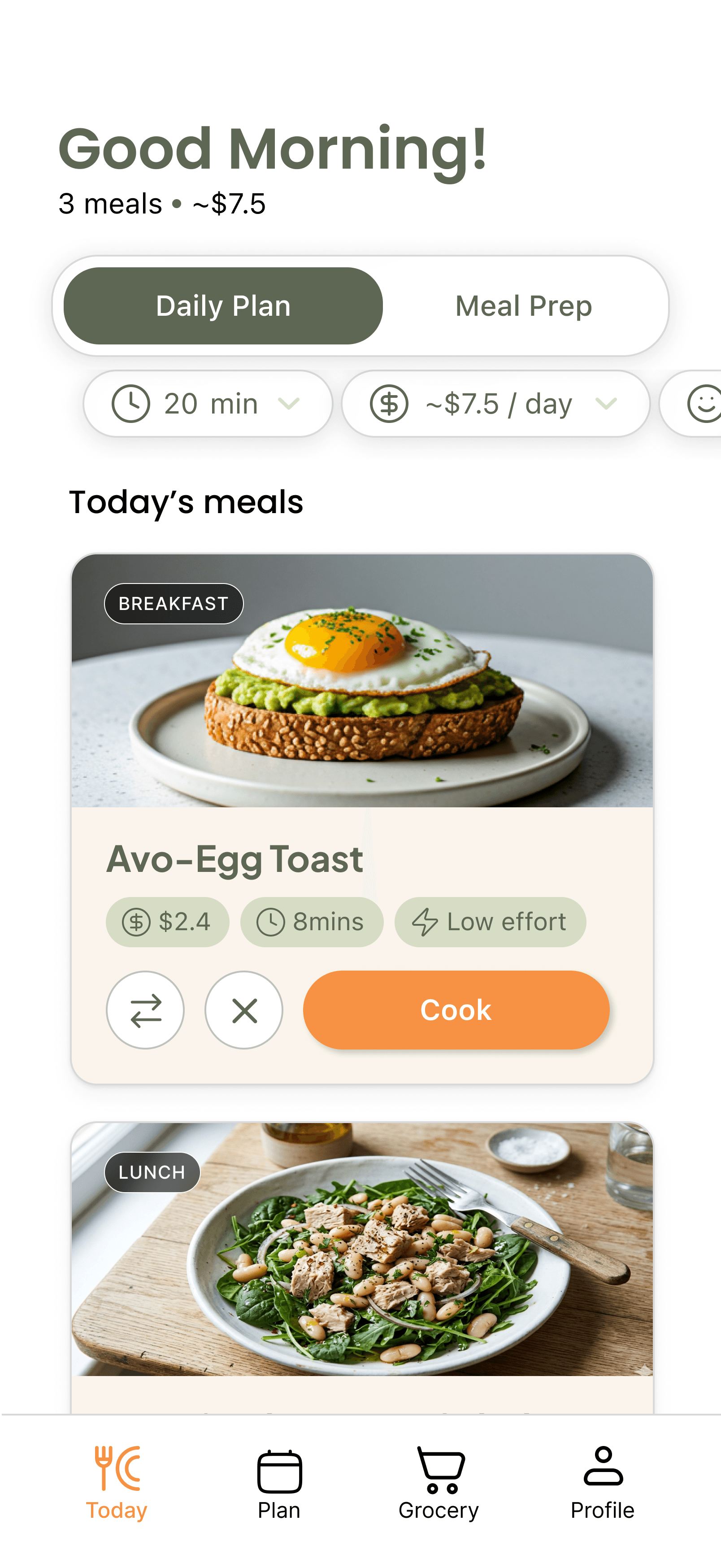
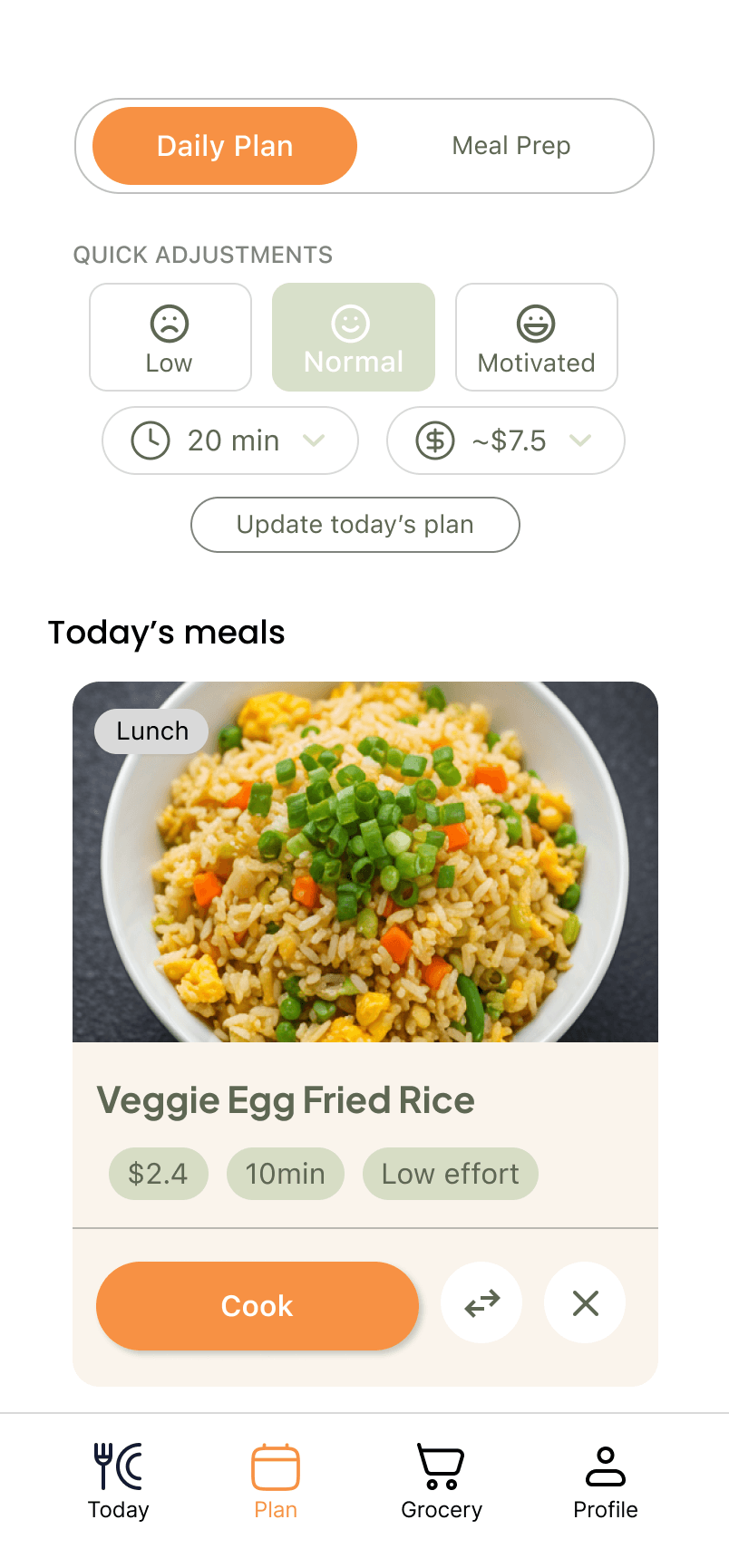
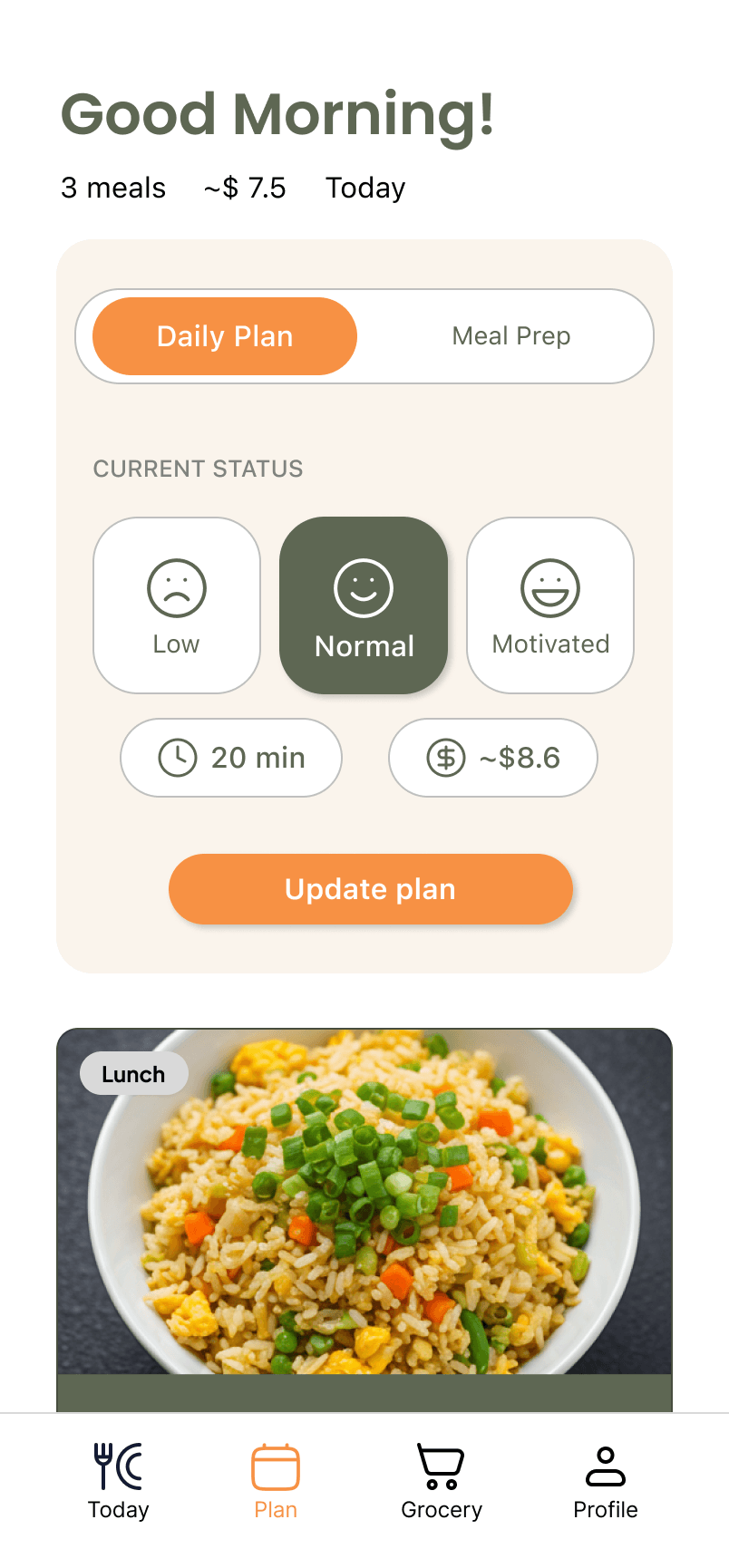
Before
V1
V2
Iterations
After
Replacing large control sections with streamlined filter pills, so users can quickly adjust settings on one page without extra navigation, saving time and making the experience easier.
Solution
Based on insights gathered from user research and competitive analysis, three core opportunities emerged.
Decision Fatigue/ Low Energy
Limited time
Limited budget
Quick Meal Swap System
- Swipe left to skip or right to choose replacement meals, creating a faster decision-making experience for busy university students. - Swap cards highlight shared ingredients between meals, helping students save money, reduce food waste.
Adaptive Daily Plan Regeneration
Users can easily update their current time, budget, and energy levels, allowing app regenerates a personalized daily meal plan.
Decision Fatigue/ Low Energy
Limited time
Limited budget
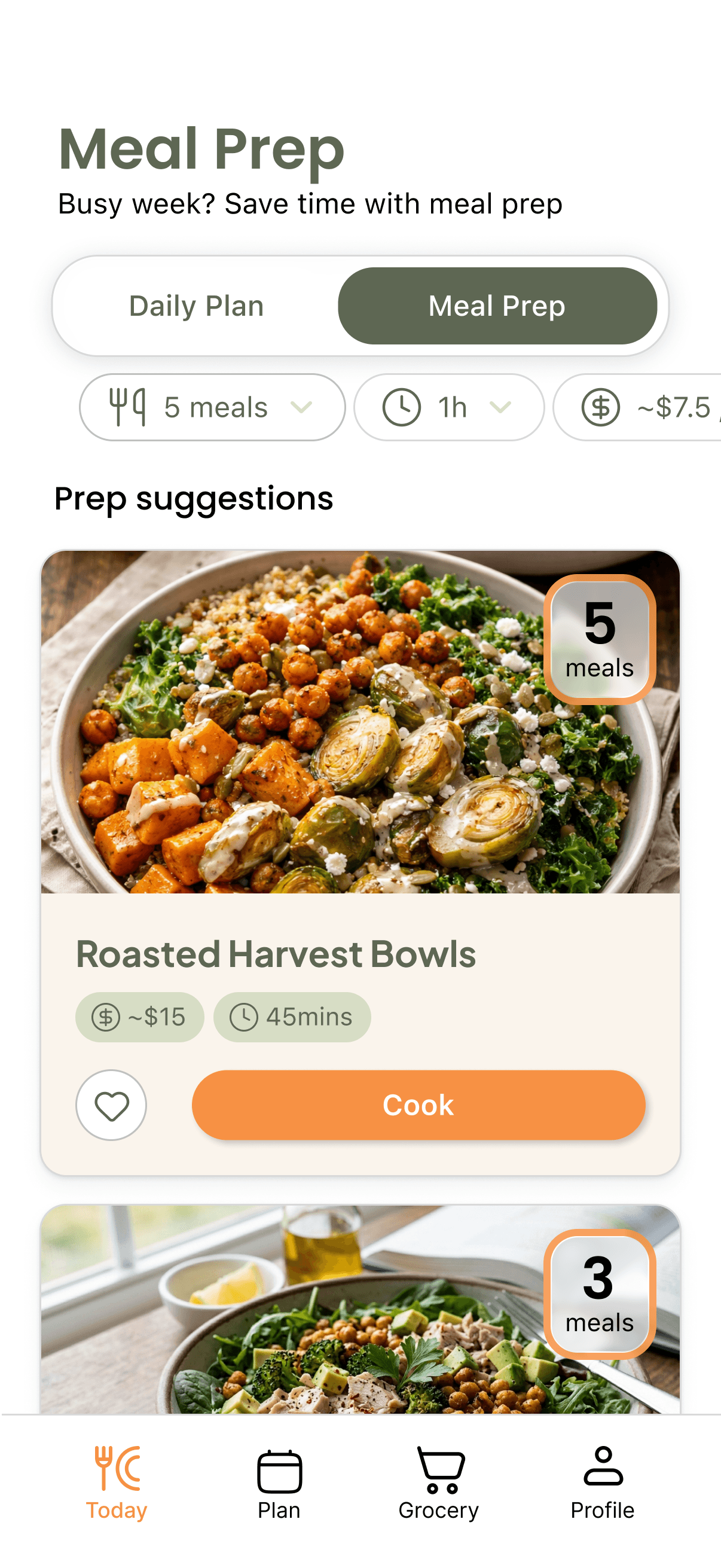
Meal Prep Mode
Users can cook once and prepare multiple meals ahead of busy periods, such as exam weeks.
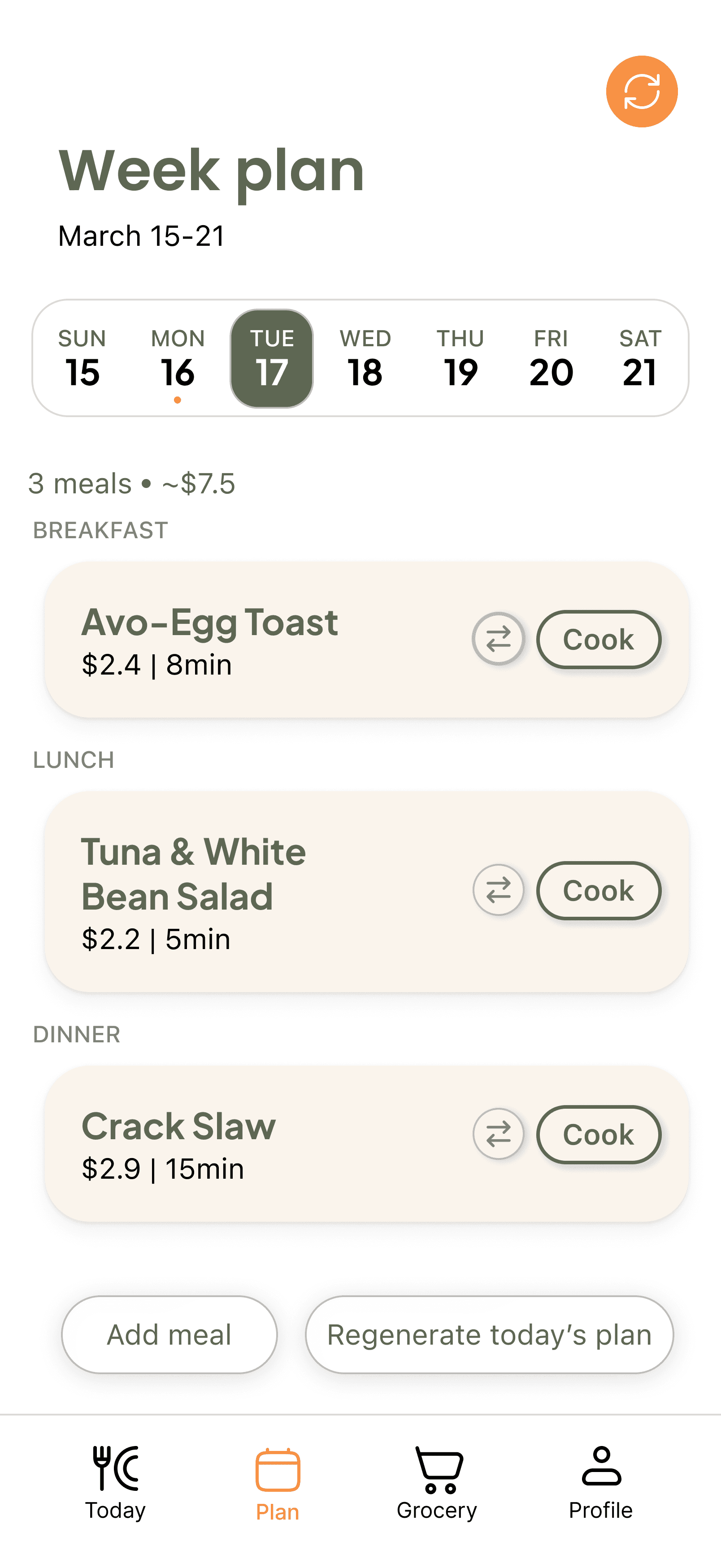
Weekly Plan Calendar View
A clear calendar layout allows users to easily preview and review their meal plans for the week, while quickly editing or regenerating meals.
Decision Fatigue/ Low Energy
Limited time
Limited budget
Grocery List
- Ingredient substitutes help students choose more affordable or accessible options to save money. - Mise automatically generates a grocery list based on the user’s meal plan.
Ingredient Reuse
The meal detail page highlights shared ingredients across multiple meals.
Other-highlights
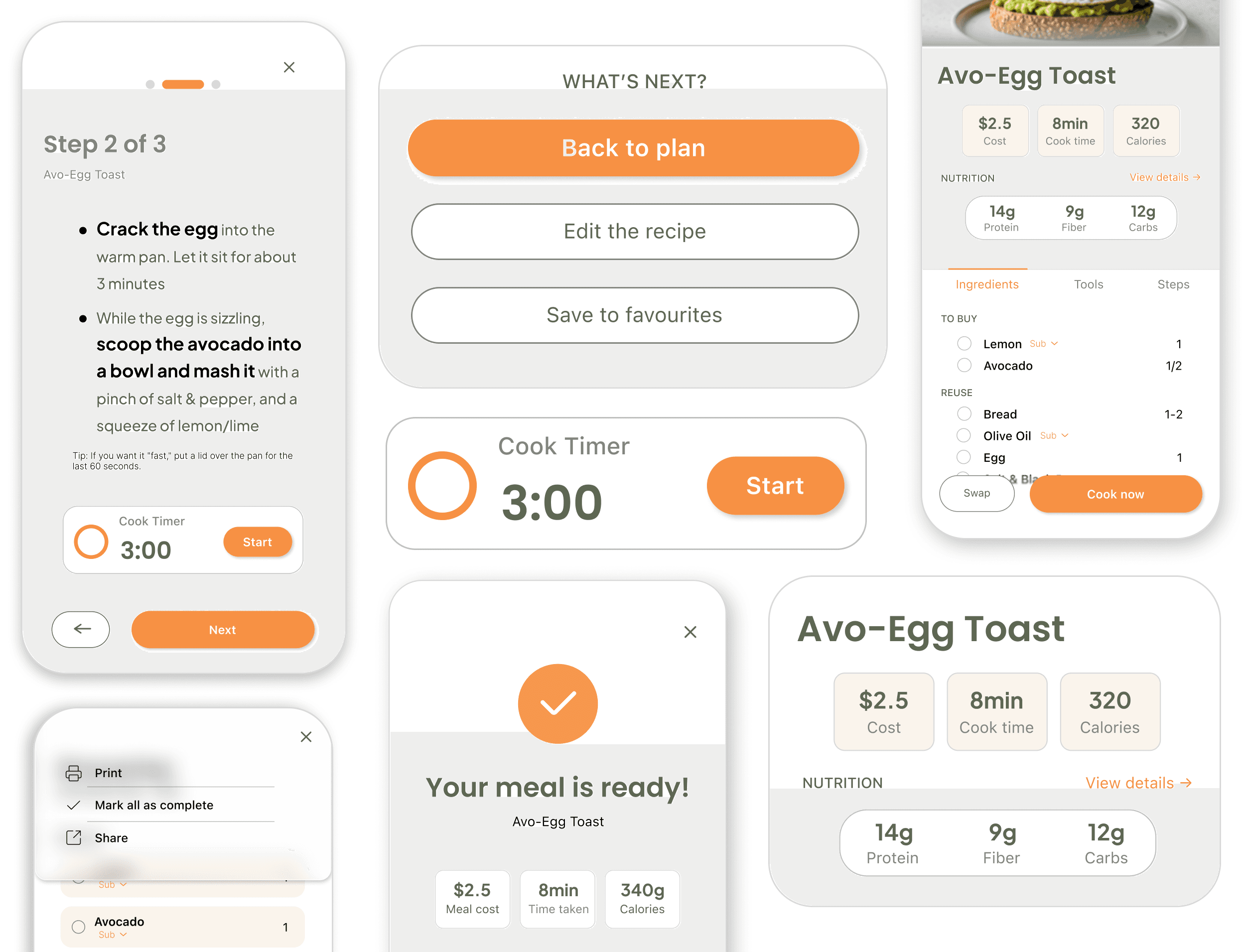
Editable Recipes
Users can customize recipes based on their preferences and real situations, such as cost, cooking time to better match their lifestyle and cooking habits.Step-by-Step Cook Mode
Easy-to-follow cooking mode with clear steps, built-in timers, and easy-to-scan layouts.Nutrition Grid
Quick nutrition overview with optional detailed health information.Printable Grocery List
Easily print or share grocery lists for faster and more organized shopping. This feature supports collaboration with roommates, family, or friends while saving time during grocery trips.
Reflection
The biggest thing I learned was how to design with intention rather than relying on default or trendy solutions and find the exact balance between clean design and instant clarity. Every feature in Mise was created to respond to a specific student problem and supported by a clear purpose behind the decision.
Throughout the design process, I continuously considered realistic student situations, such as coming home exhausted after class, feeling overwhelmed during finals, struggling with a limited budget, or lacking the energy to decide what to cook. Thinking through these real-life scenarios helped me better understand students’ actual needs and guided me in designing features that genuinely support their daily routines, rather than adding unnecessary complexity.